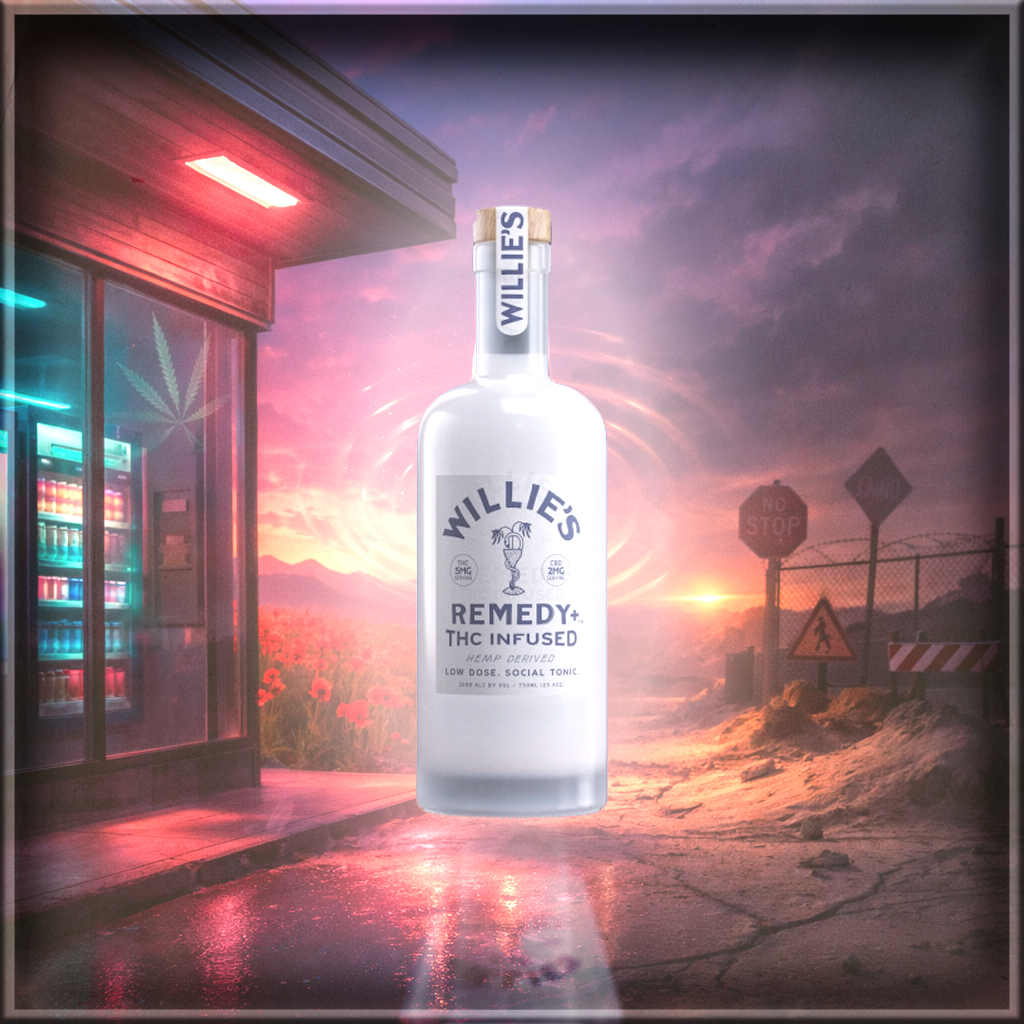
Willie’s Remedy+ is scaling hemp THC drinks into national retail, even as Arizona pushes sales into licensed channels and a 2026 federal THC cap looms.
Willie Nelson has built a career on being hard to box in, which makes him a fitting face for one of the fastest-growing, hardest-to-regulate corners of cannabis commerce: hemp THC drinks.
Willie’s Remedy+, a hemp-derived THC beverage brand endorsed by the country icon, says it raised $15 million in Series A funding to fuel national retail expansion and keep its product development pipeline moving. The round was led by Left Lane Capital with participation from Second Sight Ventures, according to a Feb. 5 company news release.
This is a high-profile bet that hemp THC drinks can scale like a traditional consumer packaged goods play — the kind of thing you can pick up during a routine retail run — at the exact moment federal lawmakers are narrowing the definition of hemp and several states, including Arizona, have signaled they do not want intoxicating hemp products riding shotgun in the unlicensed marketplace.
The company’s pitch is built around speed and familiarity. Its rollout plan reads like a mainstream beverage strategy: a 10-SKU lineup, a retail partner list that includes major chains, and a distribution assist from JuneShine Brands, the canned-cocktail company that says it provides sales, marketing and distribution services and can plug the brand into a wholesaler and three-tier network.
The regulatory reality reads like a warning label.
A Congressional Research Service analysis of a November 2025 change to federal hemp law says the new definition excludes “final hemp-derived cannabinoid products” containing more than 0.4 milligrams of THC per container and takes effect Nov. 12, 2026. That container-level cap is far below the dosages commonly marketed in today’s intoxicating hemp products, beverages included.
In other words, Willie’s Remedy+ is sprinting into retail while the finish line is moving.
The money, the momentum and what’s missing
Willie’s Remedy+ did not disclose valuation, board changes, or a granular breakdown of how the new money will be allocated in its release, which is common in announcement-only fundraising disclosures. What it did say is that the $15 million is meant to accelerate national retail expansion and continue product innovation.
The brand also made two big performance claims: it has sold more than 400,000 bottles in less than a year since launch, and it is the No. 1 THC beverage sold online. Those are the company’s assertions, not independently audited figures in the materials provided, and the release does not detail the measurement method, time window, or which online channels were counted.
The celebrity factor matters here, because it signals how investors and retailers are thinking about the category. Left Lane Capital partner Laura Sillman framed the investment as a consumer shift toward “balance” and “better-for-you” occasions, calling out “cultural authenticity” as a differentiator — a phrase that tends to translate into brand recognition strong enough to move product before the regulatory questions are answered.
Celebrity-backed cannabis products have existed for years. The more recent twist is how aggressively some brands are positioning THC beverages as an alcohol alternative, with familiar packaging cues and an on-ramp for the “canna-curious.” Consumer-facing outlets have highlighted the rise of celebrity THC drinks alongside a broader wave of low- and no-alcohol habits, which helps explain why retailers are experimenting — even if the rules are lagging behind.
The product strategy: “spirits,” seltzers and shots — and a mainstream shelf problem
Willie’s Remedy+ says it plans a 10-SKU portfolio that includes 750-milliliter THC-infused “spirits,” 12-ounce THC-infused seltzers in multiple flavors, and 2-ounce THC-infused shots. The release also leans on effect timing, describing products as “fast-acting” and “short-lasting,” with effects beginning in 15 to 30 minutes and tapering after about one to one-and-a-half hours. That is the company’s description; it did not provide publicly posted pharmacokinetic data in the announcement.
There is a separate, very practical question hidden inside the word “spirits”: where does a THC-infused bottle go in a store that already has alcohol, nonalcoholic spirits and a growing section of functional drinks? That placement decision is more than merchandising. It is policy by aisle.
Some retailers have already run limited tests. The company said it completed a limited retail test with Total Wine and “quickly ranked among top THC-infused spirits.” MJBizDaily similarly reported the Total Wine debut and the planned expansion to additional retailers.
The release also lists future retail partners that include Lowe’s, Binny’s and TXB, along with “others nationwide in 2026.” No state-by-state rollout list was included, and the company did not specify which SKUs go to which retail channels in the announcement.
That missing detail matters because hemp THC drinks are not sold into a single national rulebook. Shipping rules, age-gating, testing requirements and permitted retail channels can vary dramatically depending on where the customer is standing.
The distribution play: JuneShine and the three-tier question
JuneShine Brands’ involvement is one of the clearest tells that Willie’s Remedy+ is aiming for conventional scale. JuneShine’s CEO, Greg Serrao, is quoted in the release describing the funding as a milestone and emphasizing that the brand has “proven demand online” and is ready to replicate it at retail.
The release says the national rollout is expected to leverage JuneShine’s wholesaler and three-tier distribution network.
That sounds like alcohol, because it is.
The complication is that intoxicating cannabis products are regulated unlike alcohol at both the federal and state levels. For hemp THC drinks, the category’s growth has relied on the post-2018 farm bill interpretation that hemp-derived cannabinoids meeting the federal definition could be sold broadly. Reuters has detailed how that gray-zone era produced a patchwork of state crackdowns and legal fights, even while some courts treated certain hemp-derived products as federally lawful under the older definition.
The result is a business model that can look like standard beverage distribution in one state and like a controlled-substance problem in the next.
The federal risk: a 2026 deadline that could shrink the category overnight
The most direct threat to today’s intoxicating hemp market is not a single lawsuit. It is a calendar.
CRS reports that a November 2025 federal law change amended the hemp definition to a “total THC” concentration limit and added explicit exclusions, including a 0.4 milligrams of THC per container cap for final hemp-derived cannabinoid products. CRS says the new definition takes effect Nov. 12, 2026 and also directs FDA to publish lists of cannabinoids and further define “container.”
If the law is not revised, paused or reinterpreted in a way that leaves room for higher-dose products, many currently sold hemp THC drinks would not meet the definition as described by CRS. Companies would be left with a short menu of options: reformulate down to the cap, pivot to nonintoxicating cannabinoids, move into state-licensed marijuana channels where legal, or fight it out through lobbying and litigation.
This is not just theory. Reporting in Texas has framed the federal change as a potential disruption that could wipe out much of the market as it currently exists, given typical product dosages.
CRS also notes uncertainty about how federal enforcement will look in practice and points out that hemp industry groups have expressed opposition and prefer regulation rather than a broad prohibition.
That tension is the heart of the story: investors are funding scale, while policymakers are trying to narrow the channel.
Arizona angle: “Nationwide” hits a wall at the state line
Arizona is a useful case study because it has legal adult-use marijuana and a state leadership posture that has been skeptical of intoxicating hemp products sold outside the licensed system.
In March 2024, the Arizona Attorney General’s Office issued a formal opinion concluding that Arizona law does not permit the sale of delta-8 and other hemp-synthesized intoxicants by entities not licensed by the Arizona Department of Health Services, and that such products cannot legally be sold by unlicensed cannabis sellers.
In March 2025, Attorney General Kris Mayes sent a letter to local law enforcement explicitly stating that the unlicensed sale of any THC-infused edible product is illegal under Arizona law and warning that enforcement actions would begin after an April 2025 deadline. The letter references Proposition 207 and frames the issue as businesses selling THC-infused beverages and edibles without being licensed “marijuana establishments.”
Those documents do not name Willie’s Remedy+ specifically. They do illustrate the compliance cliff for any brand trying to sell hemp THC drinks in Arizona through general retail. Even if a product meets the federal hemp definition today, Arizona’s position has been that state law can be more stringent and that intoxicating THC edibles and beverages belong in the licensed market.
For Arizona consumers, that state-by-state reality also creates a strange contrast. Licensed dispensaries already sell regulated THC edibles, beverages and concentrates under a system that includes testing and packaging rules. At the same time, a separate intoxicating hemp channel has tried to operate in some states with looser oversight. Arizona’s approach has been to squeeze that second channel.
If Willie’s Remedy+ ultimately wants Arizona shelf space, it faces a choice shaped more by statute than by branding: build a pathway into licensed cannabis retail where permitted, or treat Arizona as a market where the mainstream retail plan does not apply.
The public health argument: why lawmakers keep coming back to youth access and safety
Supporters of tighter rules often cite product consistency, child-resistant packaging and youth access. Opponents often cite consumer demand, small-business jobs and the desire for lower-dose alternatives to alcohol.
The data that gets referenced in these fights is not hypothetical. A 2024 peer-reviewed analysis of National Poison Data System reports found 4,925 delta-8 THC exposures reported to U.S. poison centers as the primary substance from 2021 to 2022, with the exposure rate increasing about 79% from 2021 to 2022. The study also found that young children under 6 accounted for a sizable share of reported exposures.
That research focuses on delta-8, not specifically on every product category that might be marketed as hemp THC drinks. It still helps explain why regulators describe intoxicating hemp products as a public health issue rather than a niche consumer trend.
FDA has also emphasized that cannabis and cannabis-derived products sit in an oversight gap, with the agency noting its role in regulation and enforcement under the Food, Drug, and Cosmetic Act while warning consumers in other communications about risks, mislabeling and marketing that may appeal to children.
Meanwhile, recent reporting has captured how state debates over hemp THC products often revolve around youth safety concerns versus access and economic impact, with proposals ranging from outright bans to tighter age restrictions and licensing.
What to watch next, especially for Arizona
The next chapter for Willie’s Remedy+ and the broader hemp THC drinks category will be written in three places at once: Congress, FDA and the states.
CRS says the law requires FDA to publish cannabinoid lists and further define “container,” which could shape how the 0.4-milligram cap is interpreted in practice.
Brands will also have to decide how seriously to treat the Nov. 12, 2026 effective date now, while investors generally prefer growth narratives that do not include a built-in expiration timer.
For Arizona readers, the key question is less about celebrity and more about channel. Arizona has already telegraphed that intoxicating THC beverages and edibles sold outside the licensed system are a legal risk, and that enforcement is not merely theoretical.
That does not mean the category disappears. It does mean “nationwide” is a marketing word, not a compliance plan.
If this industry wants to keep selling hemp THC drinks in big-box settings, it will need rules that make sense to regulators and retailers at the same time: clear THC limits that match real-world dosing, strict age gating, transparent testing, packaging that does not borrow too much from candy culture, and labels that treat impairment like an adult responsibility rather than a brand vibe.
That is the deal lawmakers are asking for, whether the industry likes the tone or not. Willie’s Remedy+ just raised $15 million to find out what that deal will cost.
***
Trap Culture is the ultimate destination for cannabis enthusiasts who want to experience the best of Arizona’s cannabis culture. Whether you are looking for the hottest cannabis-friendly events, the latest news on cannabis legalization, trends in the industry and exclusive, limited-edition products from the top brands in the market, Trap Culture has you covered. Visit our website to learn more about our events, our blog, and our store. Follow us on social media to stay updated on the latest news and promotions. Join the Trap Culture family and experience the most immersive and engaging social cannabis events in Arizona.
Follow us on social media