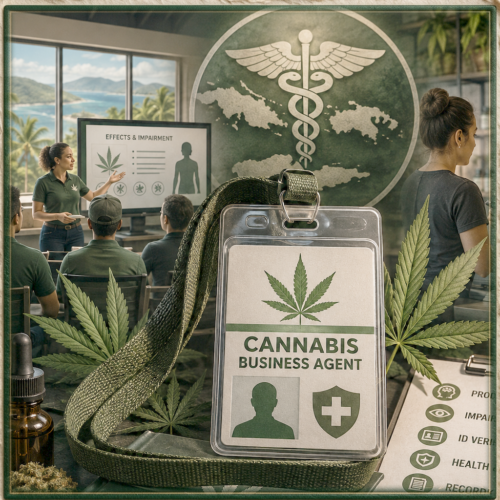
Annual medical cannabis training and agent ID cards are now required for all employees working in licensed cannabis businesses across the territory.
Every employee of a licensed cannabis business must now complete annual responsible vendor training and obtain a cannabis business agent identification card before stepping foot on the job. The Office of Cannabis Regulation Executive Director Joanne Moorehead delivered the update Thursday during a meeting of the Cannabis Advisory Board, clarifying that the requirement applies across all licensed operations, including microcultivation businesses, commercial cultivators, manufacturers and dispensaries. The announcement settles any lingering confusion about what happens when a worker fails to complete the mandatory coursework. “Cannot be employed in a cannabis business of any kind,” Moorehead said when asked directly about the consequences of noncompliance.
The training requirement is not a one-time hurdle. Moorehead explained that a cannabis business agent ID can be issued only after the applicant completes the course, and that identification card is required for every employee of every licensed cannabis business. “The law says that the training must be conducted annually within 30 days of employment by a cannabis business and annually thereafter,” she said. That means new hires have a 30-day window to get trained and carded, and every worker must renew that training every year to remain eligible for employment. The structure creates a recurring compliance obligation for businesses that must track employee training status or risk operating with unlicensed workers.
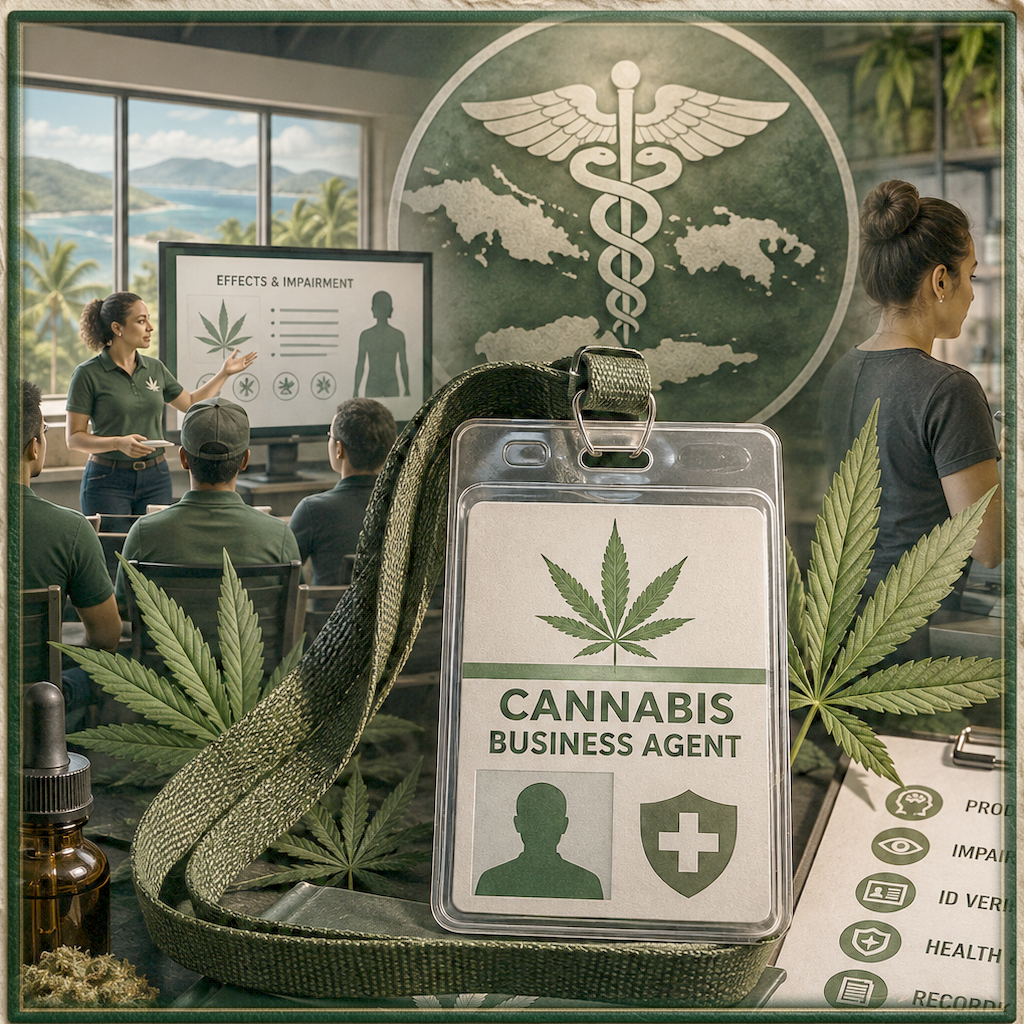
The responsible vendor course itself runs about two hours, though sessions can stretch longer depending on how many questions arise. “The class is two hours. If there are lots of questions, and sometimes it’s like two and a half hours, but generally speaking, it’s about two hours,” Moorehead said. The curriculum covers a broad set of topics designed to ensure workers understand both the products they handle and the legal framework governing their sale. Required areas of instruction include the effects of cannabis products on the body, the onset and duration of impairment and how to recognize signs that someone is impaired. Those elements are particularly important for medical cannabis patients who rely on knowledgeable staff to help them select appropriate products and understand dosing.
The training also addresses the practical side of running a compliant operation. Workers are instructed on acceptable forms of identification, detecting fraudulent identification, validating medical cannabis patient and agent cards, required health and safety standards, permitted sales hours and prohibited purchases. Recordkeeping, transport manifests, privacy protections and other subjects deemed necessary by OCR round out the curriculum. Moorehead noted that the course is weighted somewhat toward retail operations because dispensaries and other retail businesses have the most direct interaction with consumers. Members of the public cannot purchase products directly from cultivators or manufacturers, so those workers face less consumer-facing exposure, but the training still applies to them.
The training currently includes a basic explanation of the difference between cannabis and hemp, but OCR has not yet developed hemp-specific instruction because regulations for intoxicating hemp and artificially derived cannabinoid products are still being finalized. That gap matters because the hemp market has exploded in recent years, and workers who handle both cannabis and hemp products need clear guidance on how the two regulatory frameworks differ. Until those rules are finalized, the training will cover only the cannabis side of the equation, leaving hemp-specific compliance for a later date.
Training has so far been conducted in person on St. Croix and St. Thomas. OCR has not held a separate class on St. John, although participants from St. John have attended sessions on St. Thomas. The in-person format ensures that workers can ask questions and engage directly with instructors, but it also creates logistical challenges for employees who must travel between islands to attend. As the industry grows, OCR may need to consider additional training locations or online options to make compliance more accessible.
For medical cannabis patients, the training requirement represents a meaningful step toward professionalizing the industry. Patients who visit dispensaries for symptom relief deserve staff who understand how cannabinoids interact with the body, how long impairment lasts and how to spot potential adverse reactions. The training mandates that workers learn those exact skills, which should translate into better service and safer transactions. Patients holding medical cannabis cards can also expect staff to know how to validate those cards properly, reducing the risk of denied access or administrative errors.
The broader cultural context matters here. Cannabis has moved from the black market to a regulated industry, and that transition demands a workforce that understands both the science and the law. The annual training requirement signals that regulators view cannabis as a legitimate sector requiring professional standards, not a gray-market free-for-all. For workers who entered the industry during the unregulated era, the shift may feel burdensome, but the requirement aligns cannabis with other regulated industries like alcohol and pharmaceuticals, where employee training is standard practice.
The requirement also carries implications for business owners. Any licensed operation that allows an untrained employee to work risks enforcement action, including potential fines or license suspension. The 30-day window for new hires gives businesses some flexibility, but the annual renewal requirement means compliance is an ongoing cost of doing business. Owners must budget for employee time spent in training and ensure that training records are maintained and accessible for inspection.
The closing angle here is straightforward. The medical cannabis industry is no longer a Wild West experiment. It is a regulated market with clear rules about who can work and what they must know before they do. The annual training and agent ID card requirement sets a baseline for professionalism that benefits patients, workers and business owners alike. As OCR continues to refine its regulations and eventually addresses hemp-specific training, the foundation is already in place. Workers who want to stay in the industry must complete the training, obtain their card and renew both every year. That is the new standard, and it is not negotiable.
***
Trap Culture is the ultimate destination for cannabis enthusiasts who want to experience the best of Arizona’s cannabis culture. Whether you are looking for the hottest cannabis-friendly events, the latest news on cannabis legalization, trends in the industry and exclusive, limited-edition products from the top brands in the market, Trap Culture has you covered. Visit our website to learn more about our events, our blog, and our store. Follow us on social media to stay updated on the latest news and promotions. Join the Trap Culture family and experience the most immersive and engaging social cannabis events in Arizona.
Follow us on social media