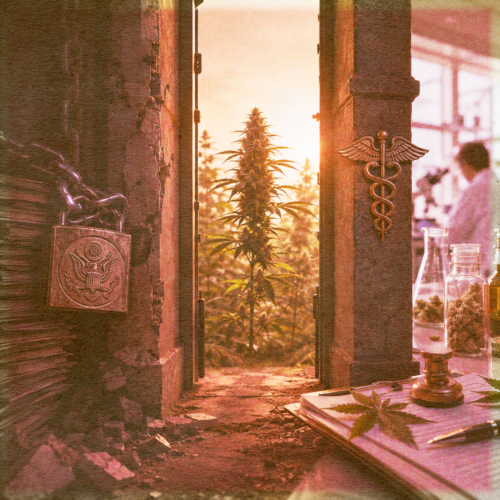
Wiz Khalifa’s nine-month jail sentence for lighting a joint at a Black Sea festival in Romania exposes how global cannabis culture keeps colliding with prohibitionist drug laws.
For more than a decade, Wiz Khalifa has treated cannabis less like a prop and more like a co-star. The mixtapes, the “Young, Wild & Free” hook, the blunt-heavy interviews, and the Khalifa Kush business all helped turn him into a shorthand for mainstream weed culture. That same identity now sits inside a Romanian criminal judgment: a nine-month prison sentence for possession of cannabis, handed down while he was thousands of miles away.
The Wiz Khalifa Romania story is not just another celebrity arrest recap. It is a collision between a performer whose whole persona is built around weed and a legal system that still treats cannabis as a “risk drug” and a criminal matter. It is also a reminder that the vibe at an Arizona dispensary does not follow anyone through customs.
What actually happened in Costinești
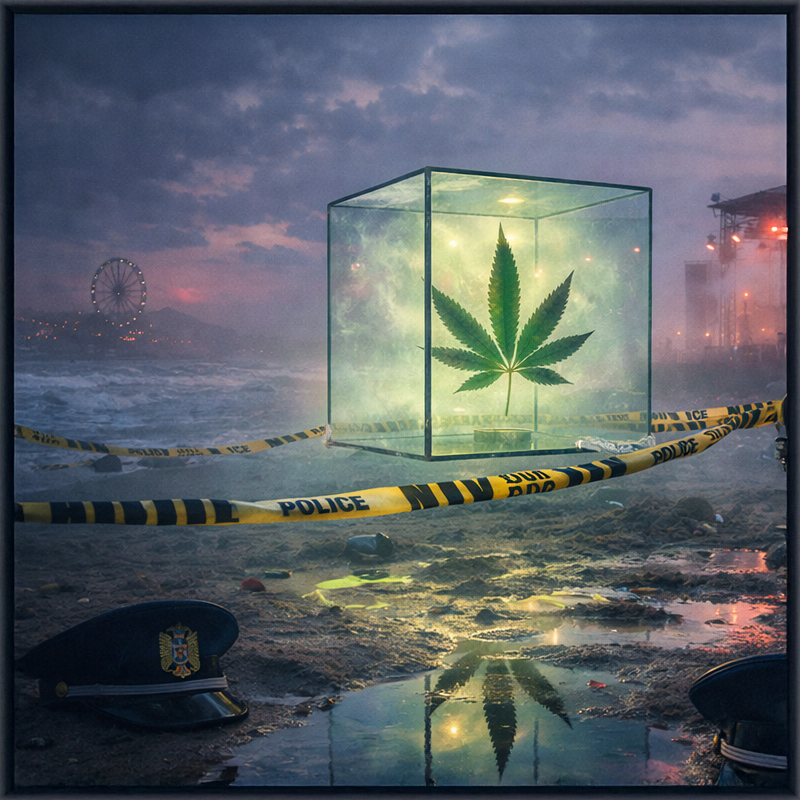
The chain of events that led to the Wiz Khalifa Romania sentence started at the Black Sea, not in a courtroom. On July 13–14, 2024, Wiz performed at the Beach, Please! festival in Costinești, one of the big stops on the summer circuit. During his set, he lit what Romanian authorities describe as a cannabis joint onstage while pro-weed visuals played across the screens behind him. Fans filmed it, as fans do.
After the show, organized crime police and Romania’s anti-drug prosecutors at DIICOT detained him. According to their statements, they found more than 18 grams of cannabis and evidence that some had already been smoked during the performance. They opened a criminal file for unauthorized possession of “risk drugs” for personal use under Romania’s Law 143/2000. In their telling, this was not a misunderstanding or a joke. It was a straightforward violation of a statute that does not carve out exceptions for visiting stars.
Wiz responded quickly. In a post on X the same day, he apologized to Romania, said he meant no disrespect, and promised he would come back to perform again without lighting up onstage. He left the country, and for a while it looked like the Beach, Please! arrest might fade into the long list of festival-weekend incidents that never really go anywhere.
From festival stunt to nine-month prison sentence
It did not fade. On Oct. 15, 2024, DIICOT announced that it had finished its investigation and filed an indictment that sent the file to the Constanța court. The charge remained possession of dangerous drugs for personal use, not trafficking, but prosecutors emphasized the onstage consumption in front of a large, mostly young crowd.
In April 2025, a lower court in Constanța issued a criminal fine of 3,600 lei, roughly 830 dollars, for illegal possession. On paper, that outcome matched the lower end of the penalty range for “risk drugs,” which allows either a fine or a short prison term. In practice, it functioned like a warning shot.
Prosecutors appealed, arguing that a simple fine for someone as visible as Wiz Khalifa failed to reflect the “social danger” of the act. In December 2025, the Constanța Court of Appeal sided with them. On Dec. 18, the appellate judges convicted him in absentia and replaced the fine with a nine-month prison sentence for possession of dangerous drugs for personal consumption. The judgment is final under Romanian procedure.
Wiz Khalifa was not in Romania when the sentence came down and had not been held there after the 2024 incident. He remains a U.S. citizen living outside the country. Whether the Wiz Khalifa Romania judgment ever becomes more than a travel problem depends on what Romanian authorities do next and how other governments respond.
Why Romanian judges said prison was necessary
Romanian law splits controlled substances into categories, and cannabis sits in the “risk drug” bucket. Possession for personal use is still a crime, with penalties that run from three months to two years in prison or a fine. That range gives courts real discretion to treat a case like a paperwork-level offense or to send someone to jail. In the Wiz Khalifa Romania file, the appellate judges chose the second option.
Reporting on the written reasoning shows why. The court leaned heavily on the setting: a festival packed with young people, a stage show built around pro-cannabis art, and an artist whose global profile includes constant weed references. Judges argued that smoking onstage in that context did more than break the law. In their view, it normalized illegal conduct, encouraged imitation, and turned a personal choice into a broadcast endorsement of drug use.
That logic fits a broader trend inside Romania, where lawmakers have spent recent years talking about tightening drug penalties in response to concern about youth consumption in schools and at mass events. Human rights and drug-policy groups there have documented an increase in prosecutions for use and possession, even as EU and UN bodies push member states toward more health-based approaches.
How it looks from an Arizona cannabis vantage point
For readers in Arizona, the hardest part of the Wiz Khalifa Romania story to process might be the scale of the punishment compared with everyday life here. Voters approved adult-use legalization in 2020. Adults 21 and older can legally possess up to an ounce of cannabis, buy it at licensed dispensaries, and, within limits, grow it at home. Festival security might still have rules and local ordinances still exist, yet the basic act of having a personal stash is not something that usually involves a prosecutor.
Seen from that vantage point, it feels surreal to watch a country send someone to prison for what, in Arizona, would read more like cannabis marketing content than criminal conduct. That contrast compounds an already blazing indictment of how inconsistent — and in some places outright draconian — cannabis laws and their enforcement still are around the world.
It also underlines a reality that can get lost in the normalization of legal weed in places like Phoenix and Tucson. Cannabis remains illegal in much of the world. In some jurisdictions, penalties have softened without full legalization. In others, possession is still firmly a criminal matter. Fans who can walk into a Tempe dispensary on their lunch break may forget that the same purchase, shifted to another country, can be the start of a criminal record.
For the Arizona cannabis community and the Trap Culture crowd, the takeaway is not subtle. Being used to legal stores and brand collabs at local events does not protect anyone from a foreign penal code. That includes artists whose entire public persona is braided up with weed.
What this means for touring artists and festivals
Whether or not Wiz Khalifa ever serves a day of the nine months, the Wiz Khalifa Romania sentence already has consequences in the touring economy. Artists with cannabis-centric images, from branding deals to lyrics, now have one more data point to factor in when they route European shows. Promoters and festival organizers in stricter jurisdictions have a clearer incentive to spell out what will and will not fly onstage.
For festivals, the risk is not theoretical. Beach, Please! now appears in coverage of a high-profile criminal conviction, not just lineup posters. That reality will shape conversations with future headliners and with local authorities. It could mean more restrictive rider language, more detailed pre-show briefings, and stricter enforcement of “no use onstage” rules when the law draws bright lines.
For artists, the Wiz Khalifa Romania judgment is a reminder that a brand built on weed does not travel clean. In legal markets, lighting up onstage can function as an in-character moment or a nod to fans. In a country where cannabis remains a crime, the same act can become Exhibit A in a courtroom. The difference is not in the joint itself. The difference is in who has the power to decide what that joint means.
The bigger indictment of global cannabis laws
Step back from the personalities and the nine-month term becomes less an outlier and more a symptom. Around the world, cannabis laws are a patchwork: full adult-use legalization in some U.S. states and parts of Europe, medical-only frameworks elsewhere, decriminalization experiments in a few places, and harsh criminal codes that have barely moved at all. The Wiz Khalifa Romania sentence drops right into that patchwork as an example of how far apart those approaches still are.
Reform advocates see the case as a textbook example of disproportionate punishment. They argue that using prosecutors, courts, and possibly extradition channels to deal with non-violent cannabis possession does little to protect public health, especially when the defendant already operates openly in legal markets. They also point to the opportunity cost: every file like this eats time and resources that could go toward serious trafficking, treatment access, or prevention.
Supporters of strict enforcement counter that the law is the law. They say that high-visibility performers have a responsibility not to model illegal behavior, especially in front of young fans. They also frame stiff sentences as necessary deterrence in a moment when social media can turn one onstage joint into a global clip in seconds.
Those arguments will not be resolved in one courtroom. Yet this conviction lands at a time when more governments and voters are asking whether criminalizing personal cannabis use still makes any sense. In that context, the Wiz Khalifa Romania story looks less like a random celebrity headache and more like a stress test for how much longer the old model of prohibition can hold.
What to watch next
The open questions now are largely procedural and political. Romanian authorities have a final nine-month sentence on the books for a U.S. artist who is not in their custody. They can choose whether to send that judgment into international channels and how aggressively to pursue it. Other states can decide how much weight to give a non-violent cannabis conviction from a jurisdiction that treats the same conduct differently than they do.
Inside Romania, future cases involving foreign performers will show whether the Wiz Khalifa Romania file becomes a one-off message or an emerging pattern. Lawmakers and courts will keep wrestling with drug policy in the shadow of EU guidance and local fear over youth drug use.
Outside Romania, the live-music industry is already adjusting. Tour managers, lawyers, and artists who play both legal-weed states and strict countries have one more case study in how badly things can go when cannabis branding leaves the marketing deck and shows up onstage in a place where it is still a crime.
In Arizona and other legal markets, fans will move on to the next festival and the next headline. The joint that lit this whole thing up will still be there in the background, a reminder that the same act can be a product shot in one place and a prison sentence in another.
***
Trap Culture is the ultimate destination for cannabis enthusiasts who want to experience the best of Arizona’s cannabis culture. Whether you are looking for the hottest cannabis-friendly events, the latest news on cannabis legalization, trends in the industry and exclusive, limited-edition products from the top brands in the market, Trap Culture has you covered. Visit our website to learn more about our events, our blog, and our store. Follow us on social media to stay updated on the latest news and promotions. Join the Trap Culture family and experience the most immersive and engaging social cannabis events in Arizona.
Follow us on social media