
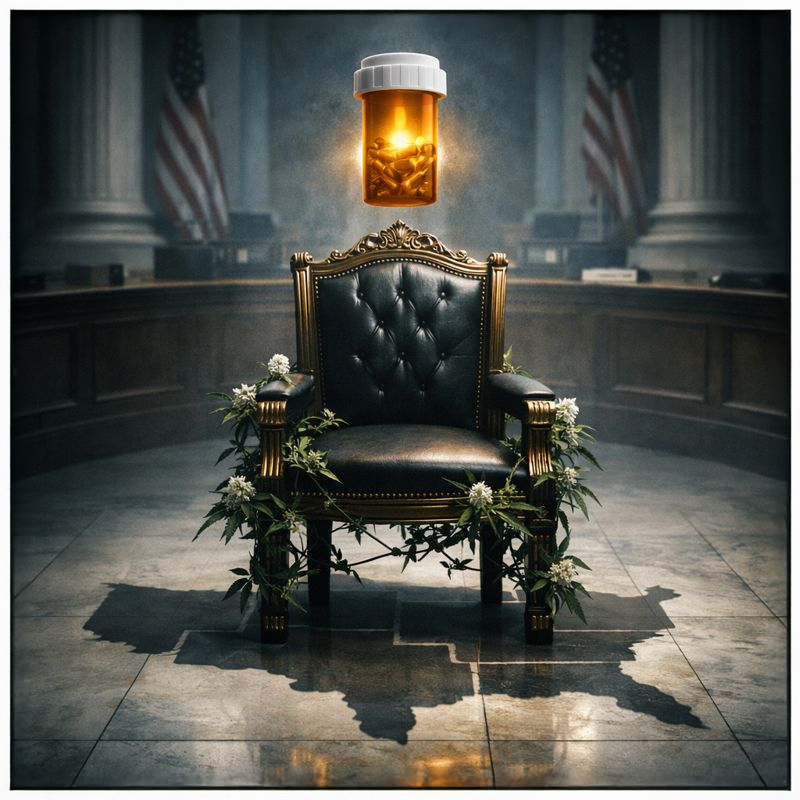
On December 18, 2025, President Donald Trump signed an executive order that could radically reshape federal cannabis policy. The move directs the Department of Justice to reschedule marijuana from Schedule I to Schedule III under the Controlled Substances Act, and it urges executive agencies to explore Medicare coverage for select cannabidiol (CBD) treatments starting in 2026.
While the move stops short of full legalization, it marks the most significant federal shift on cannabis in decades. The order reframes marijuana as a substance with “moderate to low potential for dependence” and “accepted medical use,” a formal recognition long sought by medical cannabis advocates, researchers, and industry leaders.
Marijuana Remains Federally Illegal — But Slightly Less So
The reclassification to Schedule III may not be the legalization headline cannabis supporters crave, but it delivers tangible impacts. Schedule III substances, such as ketamine and testosterone, can be prescribed with fewer federal hurdles. Marijuana’s current Schedule I status lumps it with heroin and LSD, severely restricting research and business operations despite widespread state-level legalization.
By shifting marijuana down two rungs on the Controlled Substances ladder, Trump’s order acknowledges its therapeutic potential and opens the door for expanded medical research. However, the drug remains federally illegal in the broader sense. Crossing state lines with cannabis, even for legitimate medical use, continues to violate federal law.
That legal tension is more than semantic. It means patients, providers, and dispensaries still face criminal exposure under federal enforcement — unless Congress acts to remove marijuana from the Controlled Substances Act entirely. The executive order sidesteps that broader debate, leaving it for lawmakers to untangle.
Medicare May Soon Cover CBD
Perhaps more surprising than the rescheduling itself is the executive push to make select CBD treatments available to seniors under Medicare. The directive instructs agencies to initiate steps toward coverage, potentially piloting a reimbursement program through the Centers for Medicare & Medicaid Services (CMS) as early as April 2026.
If implemented, it would mark the first time the U.S. federal government formally reimburses patients for cannabis-based medicine.
Such a move could be a game-changer for elderly patients, many of whom already use over-the-counter CBD to manage pain, anxiety, or sleep issues. But coverage under Medicare would bring structure, consistency, and affordability to a marketplace where quality and safety vary widely. It would also require rigorous clinical backing, something only now possible with marijuana’s move to Schedule III.
Still, the exact parameters of such a coverage pilot remain fuzzy. The executive order urges CMS to prioritize “non-psychoactive cannabinoid therapies with demonstrated clinical utility,” but stops short of listing approved conditions or dosage forms.
Cannabis Industry Welcomes Tax Relief and Research Access
For cannabis businesses, the implications of rescheduling are massive. As a Schedule I drug, marijuana has been subject to IRS Section 280E, a Reagan-era tax code that blocks companies from deducting standard business expenses like payroll, rent, and marketing.
Removing marijuana from Schedule I or II eliminates this tax burden. With reclassification to Schedule III, legal cannabis operators may finally enjoy the same tax benefits as other industries. That alone could change the financial calculus for dispensaries struggling under heavy federal and state taxation.
“This is long overdue,” said one Arizona dispensary owner at a recent Trap Culture mixer in Phoenix. “280E was killing us. We want to reinvest in our staff, our tech, and our community, and now we might actually be able to do that.”
Rescheduling also clears hurdles for academic and private-sector cannabis research. Under Schedule I rules, researchers have faced miles of red tape and a near-total monopoly by the federal government on production for studies. As a Schedule III substance, cannabis could become more accessible to research institutions and pharmaceutical companies, creating a data pipeline that might accelerate FDA-approved cannabis medications.
Rescheduling ≠ Legalization
While Trump’s executive order shifts marijuana’s classification, it does not legalize the substance or erase federal penalties. In practical terms, cannabis remains illegal at the federal level, and the same criminal laws continue to apply. Only Congress can formally remove cannabis from the Controlled Substances Act or enact federal legalization.
This partial reform mirrors Trump’s previous approach to cannabis — neither outright hostile nor openly enthusiastic. His administration often signaled openness to medical use but resisted full-scale legalization. This latest move reinforces that pattern: an incremental nod to popular policy without embracing broader reform.
For the roughly 40 million Americans living in states with legal adult-use cannabis, little changes immediately. Possession remains a state-by-state question, and transporting weed across state lines remains a federal crime.
Political Divide: Applause and Alarm Bells
Cannabis advocates across the political spectrum praised the executive order as a step forward, albeit a cautious one. Medical professionals hailed the move as a win for science, and industry groups celebrated the potential tax and research benefits.
However, some conservative voices — particularly those with public health or anti-drug credentials — criticized the decision. They warn that rescheduling could downplay marijuana’s risks, particularly among teens and vulnerable adults. Others argue the federal government should not be involved in subsidizing CBD treatments without long-term safety data.
In a sharply worded statement, a former federal drug czar called the Medicare CBD provision “premature and potentially reckless,” echoing concerns that federal endorsement may outpace scientific consensus.
Still, the political temperature around marijuana has shifted dramatically over the past decade. Even among older voters, support for medical cannabis is growing. Recent polling by Pew Research shows that over 80% of Americans support legal medical marijuana. Trump’s move, timed amid early jockeying for the 2026 midterms, seems to reflect that evolving sentiment.
A Strategic Gamble in an Election Year
With 2026 looming, Trump’s cannabis pivot may be as much political calculation as policy ambition. Federal marijuana reform polls well across party lines, especially among younger voters and veterans. It also plays well in battleground states like Arizona, where the cannabis industry has boomed since adult-use legalization passed in 2020.
The Medicare CBD pilot, in particular, may court older voters — traditionally a Trump stronghold — by offering relief for age-related conditions through a conservative delivery channel.
This executive order allows Trump to claim a historic first on federal cannabis reform without fully committing to legalization, a stance that might alienate parts of his base. By advancing medical access while maintaining federal prohibition, he walks a fine line that could appeal to moderates, independents, and undecided voters.
What’s Next for Cannabis Policy?
The executive order now sets into motion a months-long regulatory process. The Justice Department must formally amend the Controlled Substances Act schedules, a process involving the Drug Enforcement Administration and likely court challenges. CMS will need to develop its pilot program for CBD coverage, assess products and conditions, and determine which therapies make the cut.
For cannabis advocates, the momentum is real but incomplete. Without congressional legislation, the federal status quo remains largely unchanged — meaning cannabis use, possession, and distribution continue to fall under a confusing mix of state legality and federal prohibition.
For now, the cannabis world will take the win. Marijuana rescheduling may not be legalization, but it’s no longer treated like heroin. That’s progress, even if it’s just policy catching up to reality.
***
Trap Culture is the ultimate destination for cannabis enthusiasts who want to experience the best of Arizona’s cannabis culture. Whether you are looking for the hottest cannabis-friendly events, the latest news on cannabis legalization, trends in the industry and exclusive, limited-edition products from the top brands in the market, Trap Culture has you covered. Visit our website to learn more about our events, our blog, and our store. Follow us on social media to stay updated on the latest news and promotions. Join the Trap Culture family and experience the most immersive and engaging social cannabis events in Arizona.
Follow us on social media